EUV Lithography and Rare Earth Magnets: An Indispensable Connection
- Share
- publisher
- Gordon
- Issue Time
- Jun 30,2026
Summary
Extreme Ultraviolet (EUV) lithography is the crown jewel of modern semiconductor manufacturing, enabling chips at 7nm and below. At the heart of its ultra precision motion systems lies a material you might not expect: rare earth permanent magnets, primarily neodymium iron boron (NdFeB). A single EUV scanner uses about 10–50 kg of these magnets, and for the foreseeable future, there is no drop in replacement.
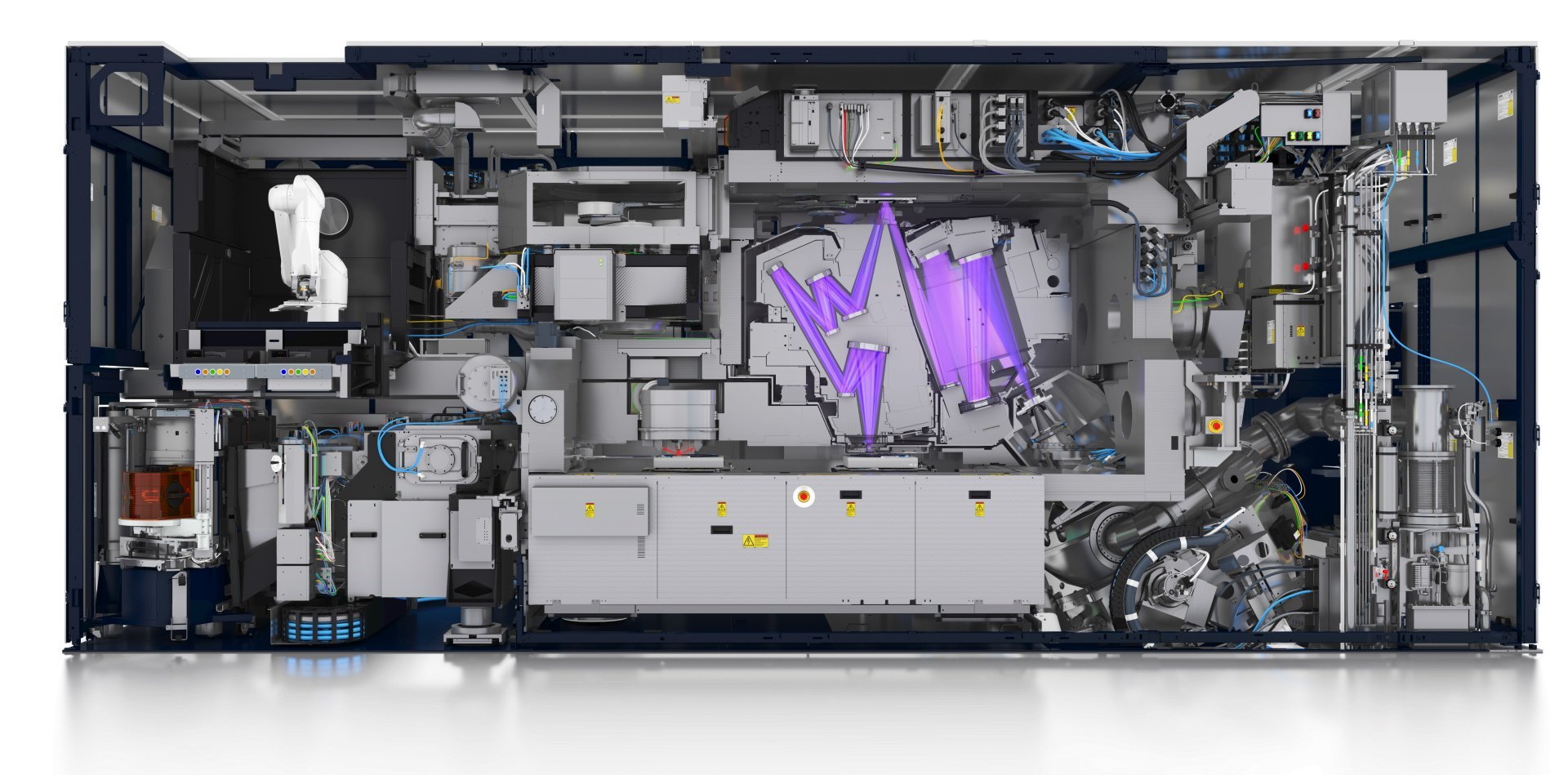
EUV Lithography and Rare Earth Magnets: An Indispensable Connection
Extreme Ultraviolet (EUV) lithography is the crown jewel of modern semiconductor manufacturing, enabling chips at 7nm and below. At the heart of its ultra precision motion systems lies a material you might not expect: rare earth permanent magnets, primarily neodymium iron boron (NdFeB). A single EUV scanner uses about 10–50 kg of these magnets, and for the foreseeable future, there is no drop in replacement.
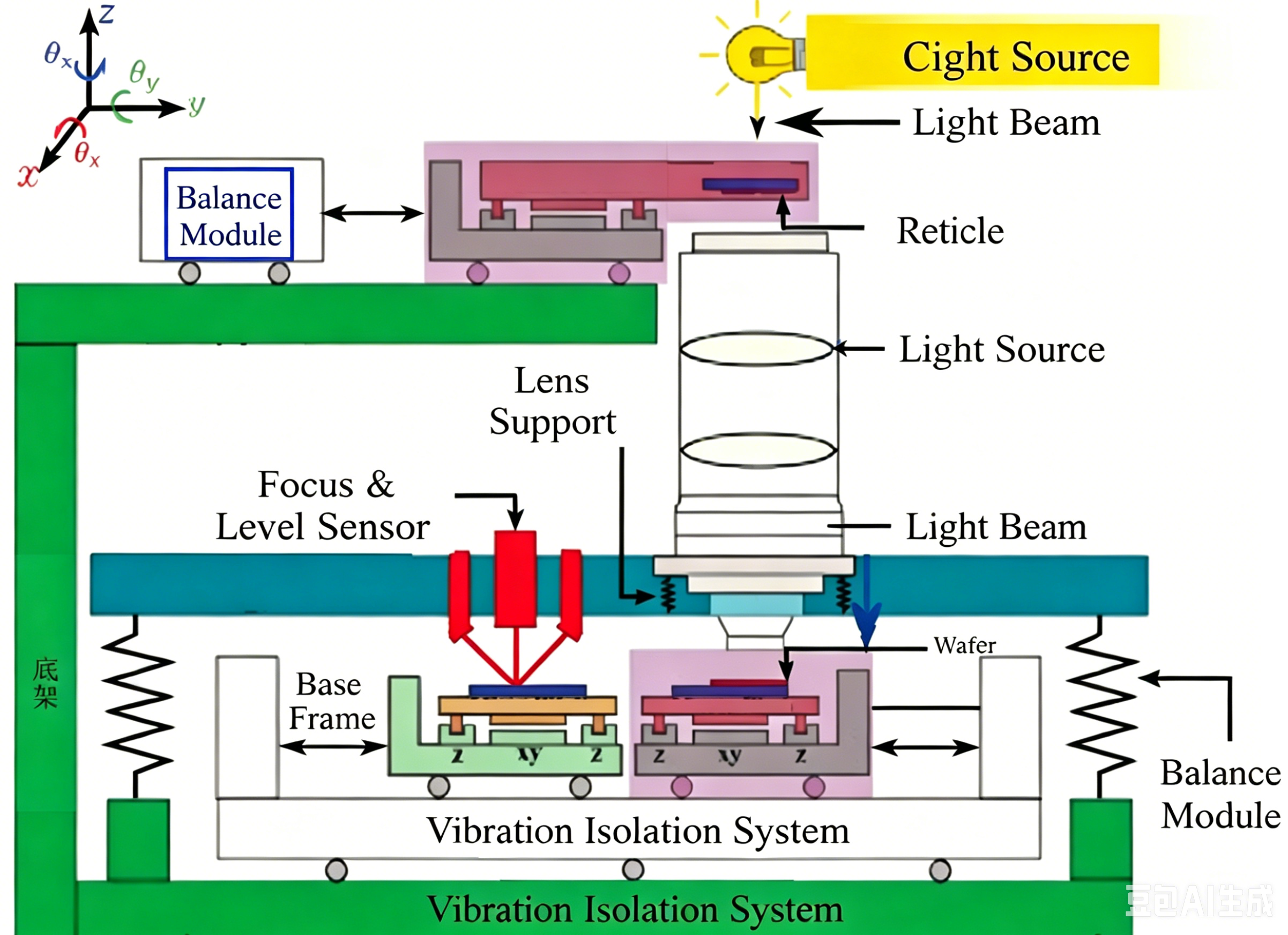
1. Where Rare Earth Magnets Are Used in EUV Scanners
A. Magnetically Levitated (Maglev) Stages
• Wafer and reticle stages: These rely on magnetic levitation plus linear motors to achieve ±2 nm positioning and high speed scanning (>100 wafers/hour).
• Magnets: NdFeB (mainly neodymium, with dysprosium and terbium added to resist thermal demagnetisation above 400 °C curie temp.).
• Quantity: Over 10 kg of magnets per stage, and upwards of 50 kg of rare earth materials per entire machine.
B. Precision Drive Motors
• Voice coil motors (for lens focusing and alignment) and brushless motors (for wafer handling) all rely on rare earth magnets to deliver high power density and sub nanometre response.
2. Performance Requirements – EUV vs. DUV
| Parameter | DUV (≥14 nm) | EUV (≤7 nm) |
| Positioning precision | ±5–10 nm | ±2 nm |
| Magnetic flux density | Moderate | Higher (to minimise stage size) |
Thermal stability | Lower Dy/Tb doping (<1%) | Higher Dy/Tb doping (1–3%) to withstand elevated heat loads |
| Material purity | Standard | Stricter to ensure uniform magnetic fields |
In short, EUV demands more magnets, higher performance, and tighter tolerances.
3. The Maglev Stage – How It Works
The maglev stage is a 6 degree of freedom (6 DOF) platform (X/Y/Z translation + pitch/roll/yaw rotation) that operates with a micro /nanometre air gap – no friction, no wear, no lubricants, and ultra low vibration.
Principle of Levitation
• Electromagnetic attraction (EMS) – electromagnets in the stator pull the mover upward against gravity (gap: 50–300 µm).
• Electrodynamic repulsion (EDS) – repulsive forces between permanent magnets (rare earth) on the mover and stator, suitable for high speed/heavy loads.
• Hybrid (mainstream) – permanent magnets provide the base levitation force (reducing power consumption), while electromagnets actively adjust for precision.
Drive Principle
• Planar linear motors – stator coil arrays + mover permanent magnet arrays generate Lorentz forces for X/Y motion; Z axis and tilts are controlled by independent electromagnets.
• 6 DOF decoupling control – multiple actuators work together to suppress cross coupling and achieve independent control of all six degrees.
Closed Loop Control – Essential because maglev is inherently unstable.
• Outer loop (position): Laser interferometers/capacitive sensors (resolution 0.01 µm)
• Inner loop (current): High speed amplifiers (response 1 MHz)
• Algorithms: PID + Field Oriented Control (FOC) + Active Disturbance Rejection (ESO) for nanometre level stability.
System Components
• Stator: Rigid granite/ceramic base with embedded electromagnets, coils, and sensors.
• Mover: Aluminium honeycomb/ceramic platform with permanent magnet arrays underneath.
• Actuators: Levitation electromagnets, planar motors, and guidance magnets.
• Metrology: Laser interferometers (X/Y, 0.1 nm resolution), capacitive sensors (Z/tilt, 1 nm), angle encoders (rotation).
• Controller: Real time DSP/FPGA + power amplifiers + host computer.
Key Specifications
• DOF: 6
• Stroke: X/Y 10–50 mm; Z 0.1–1 mm; tilt ±0.5 mrad
• Positioning accuracy: ≤5 nm RMS; repeatability ≤2 nm
• Motion noise (Z): ≤10 nm RMS
• Control bandwidth: 100–200 Hz; natural frequency ≥500 Hz
• Load capacity: 1–10 kg; power ≤50 W (thanks to permanent magnet bias)
4. Alternative Technologies – Can We Do Without Rare Earth Magnets?
Yes – pure electromagnetic (EMS) systems with no permanent magnets have already been demonstrated at the lab and commercial levels, achieving nanometre precision and 6 DOF control.
A. Pure EMS 6 DOF Maglev Platform
• Principle: Stator consists only of electromagnets/coils; mover is a simple ferromagnetic plate (steel/iron nickel alloy) – no permanent magnets.
• Representative: PI’s PIMag® 6 D (commercial, industrial grade).
o Resolution: ≤10 nm displacement; ≤10 µrad angle
o Repeatability: ~±20 nm
o Stroke: Z ±2 mm; XY expandable; tilt ±5°
B. Planar Motor – Type 6 DOF Stage
• Stator: dense array of AC coils (no magnets); mover: passive ferromagnetic plate.
• Vector controlled multi phase currents generate X/Y drive + Z levitation + attitude control – fully decoupled.
• Precision: ≤10 nm resolution; static accuracy ~4 nm RMS; Z stroke 10 mm; XY infinitely expandable.
C. Hybrid – Electromagnetic + Air Bearing
• X/Y driven by magnet free electromagnets; Z suspended by precision air bearings; attitude controlled by differential electromagnets.
• Accuracy: ±0.1 µm positioning; ±20 nm repeatability; suitable for lithography and inspection.
Comparison – With vs. Without Permanent Magnets
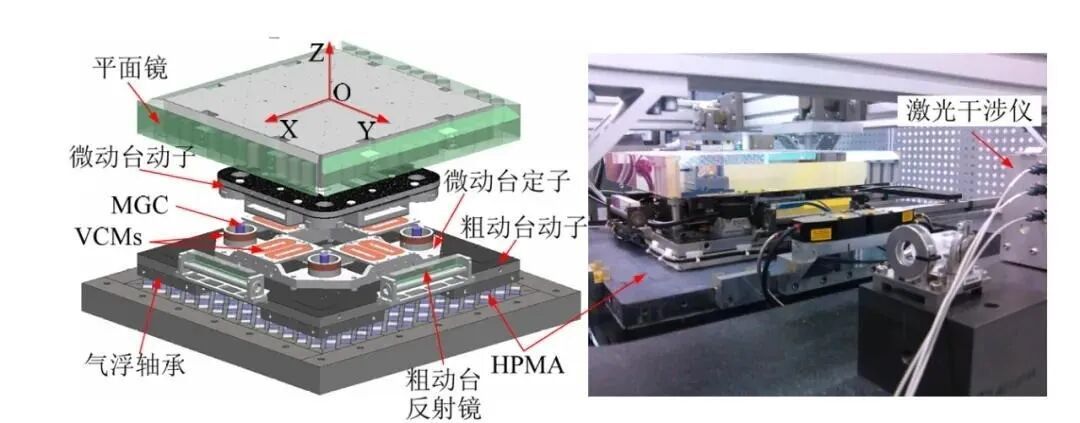
Comparison – With vs. Without Permanent Magnets
| Metric | Hybrid (with PM, e.g. ASML) | Pure EMS (no PM, e.g. PI/Nanjing) |
Positioning accuracy | 5–20 nm | 4–20 nm (comparable or better) |
Power consumption | Low | Slightly higher (but acceptable for small loads) |
| Load capacity | High | Moderate |
| Advantages | Efficient, mature | No rare earth, no stray field, vacuum compatible, lower cost |
| Disadvantages | Relies on critical minerals, stray fields | Higher heat generation, needs active cooling |
5. Why Doesn’t ASML Switch to Magnet Free Solutions Immediately?
If pure EMS platforms already achieve similar precision, why does ASML stick with rare earth magnets?
1. Precision bottleneck – ASML’s current hybrid maglev stages operate at ±0.5–2 nm. Pure EMS would require significantly higher currents, leading to thermal expansion and eddy current drift – stable <5 nm control is not yet mature.
2. Architectural overhaul – Replacing a mover that is “permanent magnets + lightweight yoke” with a “pure ferromagnetic” mover (3–5× heavier) demands complete re engineering of stiffness, thermal management, and control loops – a 3 to 5 year development cycle.
3. Production risk – ASML’s EUV order book is full. Halting production to retool would cost billions. The current hybrid design has proven >99.9% yield; the magnet free alternative has no such track record.
6. Outlook – Short Term vs. Long Term
• Short term (1–2 years):
ASML will continue with the rare earth + electromagnetic hybrid approach. Efforts will focus on supply chain diversification and reducing magnet consumption – but the core architecture stays.
• Medium to long term (3–5 years):
If rare earth export restrictions persist, ASML may accelerate R&D on pure EMS platforms. However, a commercial product before 2030 remains unlikely due to the massive validation and reliability testing required.
Rare earth permanent magnets are not just a convenience – they are the enabling core of EUV’s precision motion.
While magnet free alternatives exist and work well in many precision applications, they are not yet ready to replace the incumbent in high volume, sub 2 nm EUV lithography. For now, the world’s most advanced chips still ride on a foundation of neodymium, dysprosium, and terbium.